Thursday, May 04, 2006

(D) April 30, 2006 - Fire of Anatolia

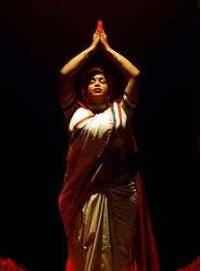
NOW, did I watch Irish dance show Riverdance or the Turkish effort Fire of Anatolia at the Kuala Lumpur Convention Centre on Wednesday?

It was supposed to have been the latter (previously a production called the Sultans of the Dance), which comprises a mosaic of folk dance and music from the historically and culturally significant region of Anatolia in Turkey.

However, those elements were weaved seamlessly into the mainly soft-shoe Riverdance (Irish folk dance) technique that Anatolia’s general art director, Mustafa Erdogan, had adopted. Confusing, not to mention disappointingly derivative. Each dance, whether it started out Turkish or Western (ballet and modern dance), to my disappointment, ended Irish and (without fail) with shouts of “Hey!” from the dancers. While big-bang endings are fine, quiet moments can have a very powerful effect in dance.

The chance for this was wasted in the piece called A Lament, where life ebbs away from the migrants as they travel the hard road into Anatolia. (The region has seen much migration over thousands of years as it has been populated by a host of peoples, including the Hittites, Phrygians, Cimmerians, Greeks, Romans, Lydians, Persians, Goths, Kurds, Byzantines, Seljuk, Ottomans, Turks and even Celts.)

The dancers in white, spinning upwards towards God, beautifully and accurately depicted the affirmation of death. But the impact of this scene was short-lived with the insertion of a template ending.


A Lament. Pixsource: The Star


The dearth of information in the RM20 programme did not help the audience appreciate Turkey’s rich culture and history. What were the types of folk dances featured, from where did they originated, what was the significance, if any, of the costumes? What were the instruments used? Who were the mythological characters cast in the story and why are they significant in Turkish history?

Their claim to being Dionysian (the act of worshipping Dionysus, god of law, wine, freedom, passion and fertility) was best reflected in the first scene that comprised a series of fiery dances of fire worship, flame flicker and sun formation. Although faultless in going through the motions, the dancers have not quite mastered what American dancer Isadora Duncan was particularly good at: emanating the spirit of worship.

The best part of the show was, of course, the belly dancing. Who can resist the vision of beautiful, midriff-baring girls with “vibrator” hips? The movement vocabulary was that of isolation – most pervasively of the hips. Isolation of the shoulders, head, and hands and the undulating movements of the torso interrupted with contractions were also used in the choreography.

Although culture and history were not explained, we saw a glimmer of Turkey through the snippets of folk dance performed in traditional costumes, and during the traditional drums performance.

Essentially, the success of the production relied more on mass synchronisation, formation and colourful costumes for spectacle, and less on choreography and artistic direction.

But then, this is just an armpit’s view of the show, seated just four rows from the stage. Fire of Anatolia did receive thunderous applause at the end of it.

To digress, I must say that the seats at the convention centre’s Plenary Hall were more comfortable than the crammed-together seats at KL’s Istana Budaya. Of late, big foreign productions seem to be moving away from the latter venue and heading towards the convention centre, which opened to much praise last year.

Fire of Anatolia, which is Erdogan’s brainchild, was first staged in 2002 and has since performed on several continents. It ran for three nights at the KLCC, beginning on April 26.

The show was brought to Malaysia by Jewels Events & Consultancy (M) Sdn Bhd in collaboration with Turkey’s under secretariat for defence industries, the Turkish Embassy, and Malaysia’s Culture, Arts and Heritage Ministry.

Tuesday, April 25, 2006

(R) GUBRA's Duet


A dance for two, GUBRA’s choreography pairs two parallel worlds as they waltz to interracial, religious, and (extra) marital tunes.

GUBRA is Yasmin Ahmad’s 3rd feature film after RABUN and (the more successful) SEPET.

In GURBA, one story continues from SEPET. Now, Orked (Sharifah Amani Yahya) is a young, upper middle-class working woman married to Arif (Adlin Aman Ramlie), a successful advertising executive who is considerably older than her. Here, Orked who looks way below the legal age gets away with doing things married people do, and exudes unrealistic maturity in emotionally manipulating ‘the other woman’ in her husband’s life.

She meets Alan (Alan), her ex’s brother. In a Veet endorsed scene, currents flow between the two as she plucks hair off his chest while making conversation. But this is less pretentious than the nauseating ‘I support bangsa Malaysia’ conversation in Alan’s cute yellow truck.

The gem in GUBRA lies on the other side of town where a young Muslim cleric and his wife live next door to prostitutes. Yasmin liberally stabs at Muslims in Malaysia in a several scenes. The cleric pets a crippled dog (his hands didn’t get wet, no?), the cleric’s wife does not angry at Temah the prostitute for not wearing tudung, and the couple, in accepting the prostitutes’ company does not practice ‘I’m-holier-than-thou’ hypocrisy.

The story also reveals how economically and spiritually destitute the prostitutes are and that, at the end of the day, they are only human. This perhaps is the sincerest effort on Yasmin’s part.

However, during the press conference to launch GUBRA, Yasmin did not thank her main sponsor, DiGi. Has this restraint got to do with LB winning Maxis?

Whatever the reason, at the end of a duet, it is impolite not to thank the partner.

As for DiGi, maybe it’s Time to Change…

… partner

Saturday, April 15, 2006

(R) Happy New Year Cambodia!

This year, the new year falls on 14th of April (a 3-day festival). Read more about the Khmer New Year.

Just back from a trip to Cambodia, I've managed to snap some of the pre-festival cheer. You will see this decorative item hung in homes and business venues. And look, it's also the year of the dog! :)


Pix by Choy Su-Ling

Saturday, April 08, 2006

(R) Rise - Even with One Leg

"Little minds are tamed and subdued by misfortune;
but great minds rise above them"
- Washington Irving

Saturday, April 01, 2006

(R) 9MP

While the nation rolls out their Ninth Malaysia Plan, Break-a-Leg rolls out her Ninth Mental Plan for 2006 - 2010. She looks at 5 issues:

Reducing Income Equalities
As part of the poverty eradication programme to resolve the low-income blogger plight, break-a-leg finds herself a proper job

Rethinking Malaysian Education
Mother was right - I should have aimed for MRS before PHD

Making Speed a Competitive Advantage
With the increase in petrol price, drive faster to enhance fuel efficiency

Comprehensive Strategy to Engage China and India
Outsource the strategy development to India and manufacture the plan in China

Strengthening National Unity
Go watch GUBRA, sponsored by DiGi

(M) March 18, 2006 - Dialogue in Skin (by Hands Percussion)


Centre of Gravity
Pix Source: Hands Percussion


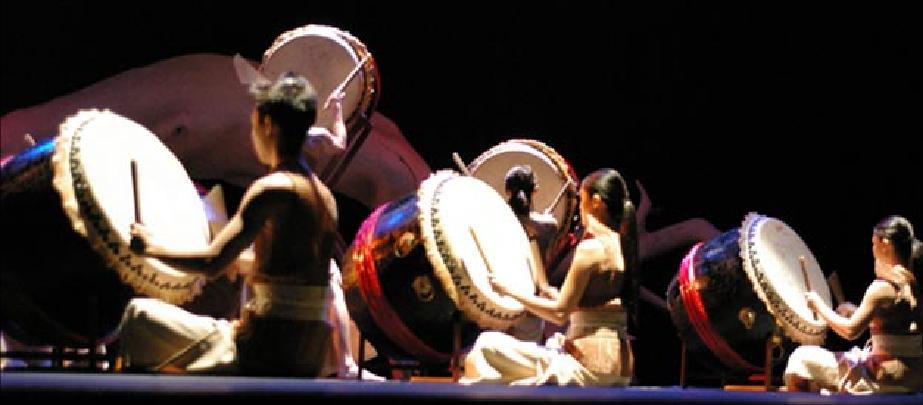
EARTH, water, metal and fire – these are the “elements” the Hands Percussion Team sought to portray through Dialogue in Skin, held at the Kuala Lumpur Performing Arts Centre (KLPac) last week.

Dialogue was first staged in May 2004 in Penang during the opening of the YTL Arts Festival. The group, formed in 1997 by Bernard Goh, creates unique performances using gu or traditional Chinese drums. It is easy to create fanfare with gu – the sounds that reverberate from them are loud, arresting and vibrant. What’s tough is “taming” these drums to express what the performer wants.

The KLPac show pulled the audience in with Centre of Gravity, the first item. Everything has a centre of balance, and the drummers got theirs from positioning their feet and knees in two of the major kungfu stances – “horse” (feet apart with both knees bended) and “bow and arrow” (one leg extended to the back and the other forward with knee bent). The earth-brown costumes of the performers complemented the primitive and tribal feel of the piece. They deployed techniques like beating the surface of the drum (at the centre and edges) and running their drumsticks along the sides of the gu (where there is a ridge of tacks holding down the skin).

The second piece, Fluency, was supposed to depict the qualities of water; it failed in its choreography and composition. The flow was choppy especially when the performers had to carry and move their drums around. The clearest musical reference to the fluidity of water came from the guitarist (Aluba) and flautist (Yii Kah Hoe).

Viewers who expected to see the taiko (Japanese drum) were disappointed. Goh explained that the team did not want to risk using their taiko, which were not in very good condition. However, they employed the taiko drumming methods (seven beats and off beats) on the gu. This piece, with its theme of a wedding celebration, did not bring out the union of the two great cultures, especially with the performers all clad in black. It merely looked like a piece intended to engage audience interaction.

Armour and Skin stood out simply by injecting melody into the otherwise rhythm-centric performance. This point, which seemed like an unfair advantage at first, was quickly dispelled when a delightful “conversation” ensued between “armour” (gamelan and various Chinese cymbals) and “skin” (ju gu or military drum).

Worthy of mention are the four drummers (Jimmy Ch’ng, Chang Yih Feng, Lee Chun Keat and Chew Soon Hing), who humoured the audience by giving the surface of their drums a good massage, and experimented playfully with Chinese cymbals of varied sizes. Guest performers from Rhythm and Bronze were Jillian Ooi, Susan Sarah John, Sharmini Ratnasingam and Wong Yee Ting.


Armour and Skin. Pix Source: The Star

Drumbeat Inferno was a fiery and energetic piece in which the performers were positioned such that man and drum intertwined. The myriad of techniques and man-to-drum combinations brought out the best in contemporary Chinese drumming. The hands of the drummers moved with incredible speed, akin to mo ying sau (shadow hands kungfu).

Despite the many drums and performers on stage, the movements were seamless. The centrepiece of this item was the Shime Taiko (Japanese drum), which has a lighter, more crispy tone than the bass gu. During the piece, Ch’ng rendered an impressive drum solo on the taiko with a tau gu (small Chinese drum) attached to its side.

While Dialogue was enjoyable overall, there were some parts that threatened to bore due to repetition in style and tone. But given the Hands Percussion Team’s enthusiasm, I have no doubt they will drum up something even more creative soon.

Saturday, March 18, 2006

(D) Mar 18, 2006 - ASK Wins National Chinese Cultural Dance Competition

Joseph Gonzales, Akademi Seni Kebangsaan's (ASK) Head of Dance dropped me an email on the school's latest win. The man's obviously brimming with pride!

Congratulations, not only to ASK but to all 45 groups. It is always a matter of priority and urgency, preserving culture and heritage. And to ASK, keep up the good work!

Dear Break-a-Leg,

The 2nd National Chinese Cultural Dance Competition organized by the Chinese Language Society of Malacca and Multi-Media University was held at the Taman Budaya Melaka from 10-12th March 2006. A total of 45 groups consisting of Chinese Dance associations, secondary schools, cultural clubs and private dance schools including 7 from Singapore took part in the exhausting 3 day event.

For the first time, I decided to enter the dance students of ASK in this event primarily to gauge the achievement and implementation of the Chinese Dance syllabus into the compulsory curriculum of the Dance Department which began 4 years ago. Besides this, I felt that the students would gain from exposure and immersion in the Chinese culture and thought that it would be extremely beneficial for them to challenge themselves on a different plane.

As Head of the Dance Department, I wanted to use the event to promote and publicize the new intake for 2006 in an effort to attract a more multi-ethnic student population. The tradition of Chinese dance competitions has in fact produced numerous luminaries of dance in Malaysia such as master-pioneer Steven Koh, while cultivating the performance and choreographic abilities of Vincent Tan, Mew Chang Tsing, Choo Tee Kuang, Loke Soh Kim, Anthony Meh and one of the current leaders Cheong Lin Poo, a graduate of Chinese Traditional Dance from the Hong Kong Academy of Performing Arts. It is a thriving environment that has flourished through independent patronage since the 70s.

From the first day of competition, we could feel the tension in the air as groups vied for rehearsal time, which was a mere 20 minutes on stage to work the spacing and lighting! Some of the groups had up to 25 dancers and thus the noise and chaos backstage was reminiscent of a busy ‘pasar malam’. There was a wonderful carnival-like atmosphere and it was a pleasure to see the multi-racial interaction between students of ASK, who as it turned out, were the only participants of non-Chinese background and the others. The dancers were nervous and it showed in their performances. However, after 2 nights of preliminaries, 10 groups were selected for the finals and one of ASK’s entries was chosen! We were then drawn as the 4th group to perform and we all know the significance of that number in Chinese beliefs!

Rehearsals were intensive again as the final moments approached, every hand position, eye-line and direction was checked and re-checked by all the groups and it was curtains at 8.00 p.m. The standard of performance was incredibly high showcasing both traditional and contemporary Chinese works. My personal favourite was a beautiful Tibetan dance that possessed an unusual posture with the dancers leaning back slightly with a controlled and light bounce in the step. The competition ended by 10.00 p.m. and then the waiting began.

The results were announced in reverse order and it was all in Chinese language. The ASK group really did not know or understand what was happening but joined in the festivities, cheering and robust applause for everyone. Prizes were given for Best Costume and Best Arrangement.

Finally, the much anticipated moment, and ASK was adjudged the Overall Champion of the Competition!! There was a thunderous response in the auditorium as it appeared that 10 young boys and girls of Malay origin had danced their way into the hearts of the judges Prof. Jiang Dong from the Cultural Institute of China, Nanning, Dr. Chua Soo Pong of the Chinese Operatic Association of Singapore and Mr. Steven Koh, the highly respected dance teacher from Malaysia. The presentation of ASK’s 3rd Year students was entitled JOURNEY choreographed by Zhou Gui Xin, one of its lecturers and a premier artist of China now residing in Malaysia. The dance was based on the movement vocabulary of the dances of the Xin Jiang province which has a broad and expansive style reflecting the nomadic lifestyle and the desert plateaus of China.

We are still waking up from this dream and cannot quite believe it! I feel that this is a glorious example of Malaysia’s multi-cultural heritage at its best. As the Head of Dance, I cannot express how proud I am of the work of the lecturers and students of the department but fully aware of how much further there is to go. This is the validation of the tremendous effort I have made to make dances of minority communities in Malaysia an integral part of dance training here at ASK, so that we can be truly known as the National Arts Academy.

A sincere thanks to all who have supported our work in the last 10 years and still requesting your continued support in the years to come. Take care and God Bless!

Joseph Gonzales

Saturday, March 04, 2006

(R) In Memory of Laurence Thong

In memory of Laurence Thong who passed away 12 February 2006.

For the coffee I still owe you, for your zest in life, for your love of the sea, for your love of photography, art and all things beautiful, for your love and commitment to God.

God bless you and keep you and give you peace.


This pix is dedicated to you.


Pix: by Choy Su-Ling

Tuesday, February 28, 2006

(D,T,M) Feb 26, 2006 - Chicken Parts 11 + Bazaar

Pix source: The Star

WITH the avian flu spreading, only the brave would put up a fowl event in the arts coop in Sentul West. Chicken Parts 11 + Bazaar, a production by Lee Swee Keong and The Actors Studio, was presented at Kuala Lumpur Performing Arts Centre (KLPac) last weekend.

Having watched several performances by Lee, I reckon his philosophy is not to play safe.

Started in 1998 by Lee, Chicken Parts is an experimental platform for a cross disciplinary arts experience that features collaboration with other local artists. The “parts” that made up the 11th production were site-specific video art screenings, experimental music, dance performances and a non-disciplinary art and crafts bazaar.

But Lee was nowhere to be seen though. I was told he’s in India, learning yoga. In his absence, this instalment was put together by Caecar Chong, Lee’s Butoh sidekick. Chong was also pushing the envelope, no doubt, by taking the production outdoors for the first time.

This proved to be a good move. The beautiful deck area fronting the manicured park and lake in the compound served as a natural backdrop. The tea-lights strewn on the grass looked as if stars had fallen from the sky. The audience were obviously at ease as they lounged on the steps and watched the show – a good change from the rigid seating arrangement in the theatre.

The evening began with works contributed by four Malaysian video artists – Goh Lee Guang, Kok Siew Wai, Yang Wei Han and Low Mun Leng.

Goh’s installation, set up as a karaoke set beside the lake, looked cosy. I wistfully imagined myself popping Pringles over a DVD-weekend, in my imaginary home with an audiovisual room overlooking a lake. But herein the problem: instead of a karaoke set, the installation invoked the idea of a television set.

The sequentially-ordered performance, by discipline, started with video screenings, followed by dance, then music. Although the performance was devoid of depth and context, there were several interesting ideas.

In gamelan (an orchestra comprising bronze instruments) the idea of forming “layers” of music is quite common: one musician starts, followed by another, and then another, each complementing the former.

Similarly (though less subtle), in this performance, each art form overlaps the other. When one art form enters the scene, it at once takes away the spotlight from the previous one, which fades into the background. The eye and ear shift their focus to the highest and newest “layer”.

The first screening was Kok’s Breath of Time. Video-sound artist Kok has participated in numerous video screenings and improvised music performances at home and abroad. She received awards and grants while studying in the United States.

Her video, set in an ugly urban landscape in Buffalo, New York, showed a few friends gathering at an abandoned grain elevator to make impromptu music. The effect was that of defeat and lost hope.

The subsequent videos were silent. Perhaps I’m biased towards photography; I prefer videos in which the images do the talking.

Yang’s Children featured portrait shots of kids. Designed to flow much like a power point slide show, the video depicted innocent and happy faces, oblivious to their poor living conditions.

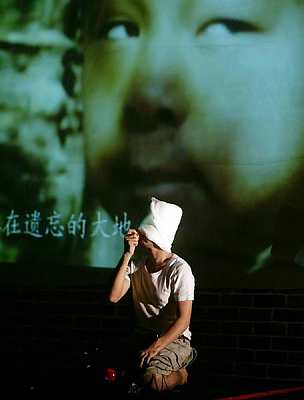
While this was being screened, Chong set himself on a small stage in front of the white screen. He blindfolded himself with a white cloth and knelt there eating tomatoes.

Meanwhile, Jerome Kugan kicked off the experimental music by contributing his voice. The poet, musician, writer and singer-songwriter was even a bomoh! I swear he stopped the clouds from breaking into rain as he hummed in his red shawl and white underwear!

Besides Jerome (vocals), the musicians comprised Azmyl Yunor (effected guitar pickup feedback), Abdul Aziz (flute), Ronnie Khoo (amplified violin), Yon Yen Sin (clarinet and saxophone), Tan Kok Hui (drums) – all members of the Experimental Musicians and Artists Co-operative Malaysia (EMACM).

After Children, two pieces by Low were screened. The first was called I’m Sitting in Front of my Computer and the second, Tilted Windows and Third Person.

Pix source: The Star

In both, there was a still frame (an arch and windows) set in the fore, with repetitive movements of one image (falling snow and moving clouds) in the background.

In the first video, the occasional “third person”, mainly passers-by, were captured on video. In the second, dancer Kiea Kuan Nam became the “third person” by standing in front of the video screen and superimposing himself against the video image.

Kiea presented this untitled Butoh piece after receiving the baton (the tomato bowl) from Chong. He is a member of Nyoba Dance+ (founded by Lee) and Butoh has been his preferred dance form since he was first introduced to dance during his university days.

Although the EMACM musicians managed to carry through with accompanying “music” throughout the video screenings and dances, their gig was the least enjoyable part of the performance experience.

I couldn’t help but notice that, at the end, the lead guitarist was itching for melody (but settled for chords instead) and the drummer was dying for rhythm. Disciples of experimental music messiah John Cage might call this music, but the culturally-less-adept would call it noise.


Tuesday, February 14, 2006

(R) Happy Valentine's Day

Taken from Our Daily Bread:

The Greatest Thing In The World


Well-known scientist and writer Henry Drummond (1857-1897) conducted a geological survey of South Africa and wrote what was then the definitive work on tropical Africa. But he is best remembered for his book about love, The Greatest Thing In The World.

Drummond wrote, "As memory scans the past, above and beyond all the transitory pleasures of life, there leap forward those supreme hours when you have been enabled to do unnoticed kindnesses to those round about you, things too trifling to speak about . . . . And these seem to be the things which alone of all one's life abide."

Paul warned that impressive gifts and spectacular deeds may be little more than empty noise (1 Corinthians 13:1). Our best efforts—if bereft of love—ring hollow. "Though I bestow all my goods to feed the poor, . . . but have not love, it profits me nothing" (v.3). The smallest loving act can hold eternal significance.

No matter our age or status in life, we all can strive to love others as God loves them. We may accomplish great things in our life—gain fame and fortune—but the greatest thing is to love. For of all that we have done, or ever will do, only love endures. We depart, but love abides.
—David Roper

We love because He first loved us,
He gave so we can give;
We love because He first touched us,
He died so we can live.
—Sper

Now abide faith, hope, love, these three; but the greatest of these is love.
—1 Corinthians 13:13


Tuesday, January 31, 2006

(D) Jan 30, 2006 - My Mother by Taihen


DURING the six months when I was recuperating from back surgery, I learnt that if some parts of my body refused to move, I would have to get the other parts to. The body seeks other means of mobility.

Watching polio victim Manri Kim perform revealed how far a person can go to overcome bodily limitations.

Kim, the founder of Taihen, a performing arts troupe for the disabled from Japan, was in Kuala Lumpur last week to conduct a three-day workshop and perform My Mother at the Kuala Lumpur Performing Arts Centre.

Taihen is modified from the Japanese word hentai, meaning “queer”. But it stands for “metamorphosis”. The company was formed in 1983.

Kim finds that the disabled body has expressions that no other can create. She creates movements and expressions that she and fellow disabled performers can use.

She also enlists the help of attendants known as kuroko, or backstage staff, to carry performers and props onto and out of the stage.

My Mother is one of 49 works created by Kim. It is a symbolic piece to express her longing for her deceased mother and is an attempt to carry within her her mother’s soul. Her mother, Honju, was the most valuable asset in Korean classical music and dance but a tide of fate brought her to Japan.

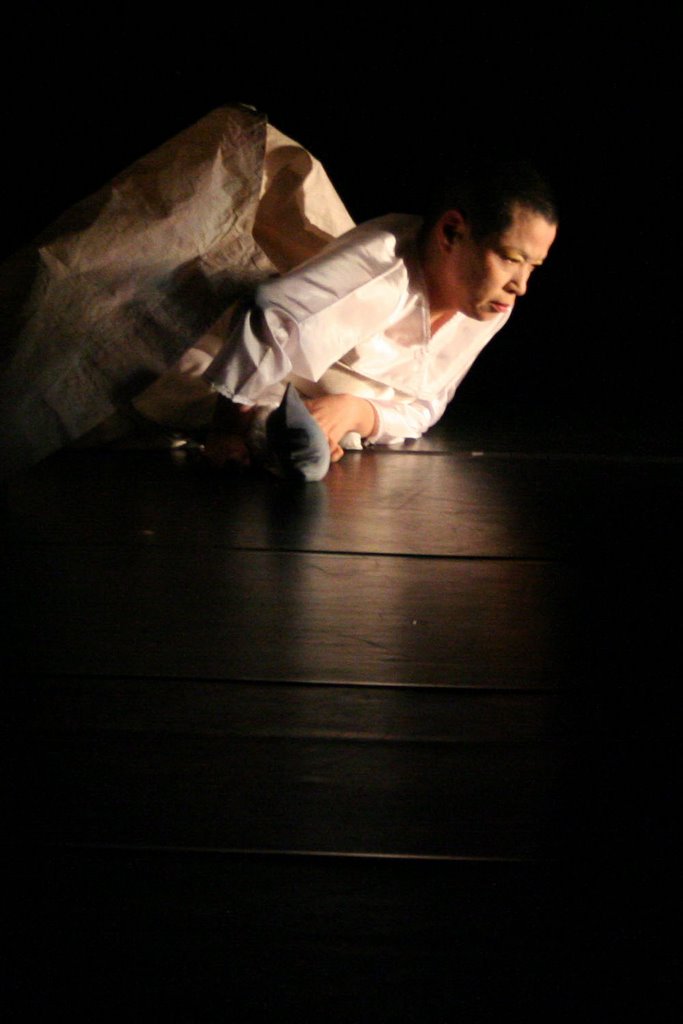
The piece that Kim performed was dark, as if she understood only too well the cruel twists of life. In the beginning, the hall was pitch black – and it stayed that way long enough for the audience to feel claustrophobic. A head and two squirming hands that then appeared under a dim spotlight had a scary effect.

It got more painful to watch as more of the body crawled out from beneath the black curtain. The pain came from the realisation that the distortions of the dancer’s body are real and her expressions of angst are a natural reflection of that distortion.

Gradually, the whole body was revealed. Anyone with less than the desired figure dictated by the fashion industry would be conscious of her body. But here, Kim’s distortions were displayed in full view of the audience, and quite unabashedly too.

To move, she used momentum and body weight. This got her moving forward in a crawl, rolling around the stage, and shifting direction when in a sitting position. She used her hands to shift her legs around.

The “unfeeling” (disabled) parts of the body followed the “feeling” (normal) parts. The inevitable movement of the “unfeeling” part, as Kim showed, is connected to one’s inner-most life. What stirs will also move.

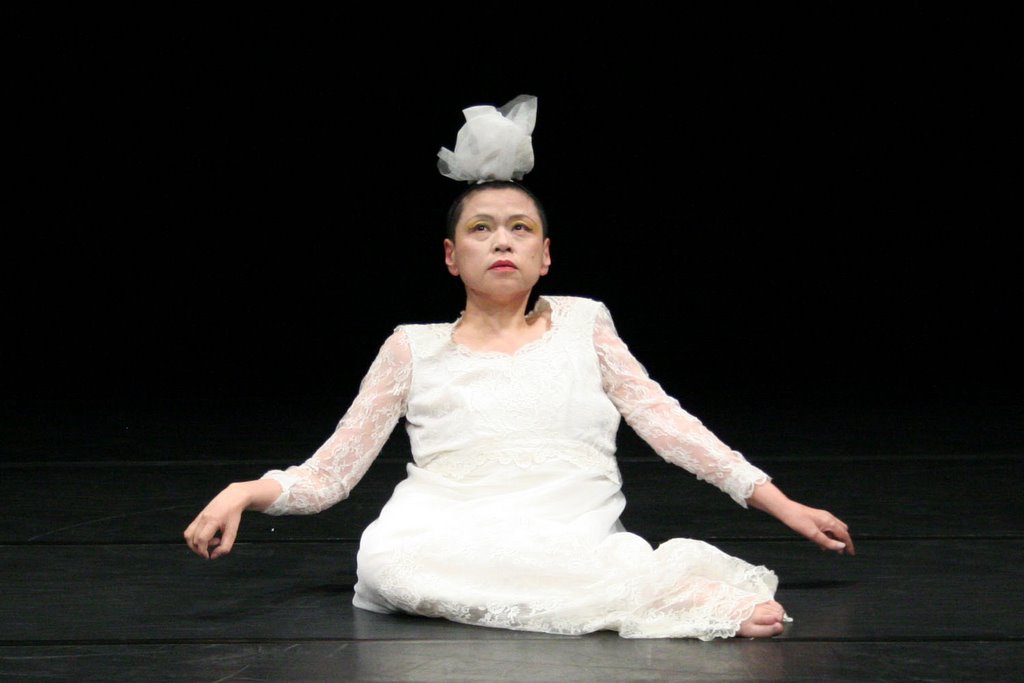
During the whole performance, we saw her transform from a baby to a Korean drum dancer, to a bride in a gown. Perhaps these were flashbacks of her mother’s life. Whatever their premise, the transformations were repeatedly startling.

The last and most touching scene saw Kim wearing a simple wedding gown with a pale yellow flower on her head. Her expression was full of hope and longing, for all the could-have-beens in her life. She, too, wants a happily-ever-after.

Dressed in the wedding gown, her visual reference "as beautiful as a bride”, cannot be more resonant with her emphasis that even distorted bodies have their own beauty.


(Pix: KLPac)

Sunday, January 29, 2006

(D) Jan 29, 2006 - Lion Dance


GONG HEI FATT CHOY!

Welcome to the year of the fire dog :)

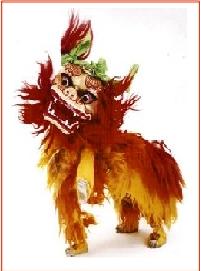
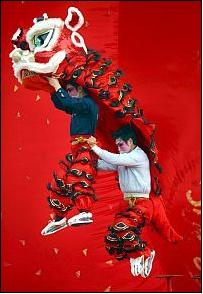
For the Chinese, Chinese New Year (CNY) is a colourful, vibrant and noisy time of the year. It's quieter now since fireworks were banned. But the rumble of the drums and clash of the cymbals still persist thanks to the Lion Dance performances all over town.

Home owners, shopping complexes and business owners invite Lion Dance troupes to perform at their homes or premises to ‘chase away’ bad luck and to usher in the New Year.

Ever wondered how the Lion Dance came about? Here’s an interesting write-up I found in the Whitefish Bay Kung Fu Club’s website:

Origins
There are many versions of how Lion Dance began. The most popular tells of a great Demon named Nian (Chinese for "year") who would come each year and terrorize the people. The people pleaded to Heaven for help against the demon and finally the gods sent Lion. Lion, a heavenly deity, came to earth and chases away the demon. The next year, the people cried out for help again, but Lion would not come. So a wise man told them to make a paper Lion and dance around menacingly while others beat on drums and gongs and lit firecrackers and displayed red cloth to frighten away the demon. The trick worked and they have been chasing the demon away every year since then. And that's why the Lion Dance is part of Chinese New Year Celebrations.

The Dance
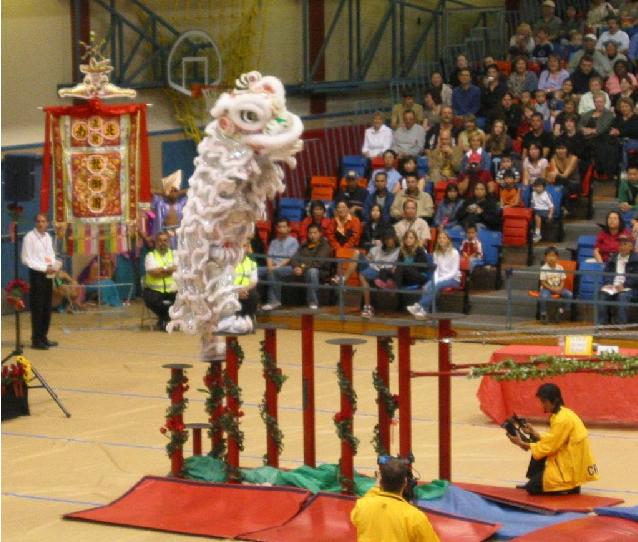
The Lion dance is a key element in the celebration of any Chinese holiday or special event. The Lion and musicians chase away evil spirits and bring good luck, long life, and prosperity to all present. The Lion is the emblem of valor, courage, energy and wisdom. The Lion dance is an extension of the Chinese martial arts and is always performed by martial artists.

Not only do the performers display strength, coordination, agility and endurance, they also exemplify the martial spirit in the Ssu-Wei or the four basic supports of a State: Li, or Decorum, Yi, uprightness of mind, Lien, honesty, and Chih, a sense of honor. The goal of the Lion is to find a way to get to the Choy Chang, which is a bunch of greens that usually hides a red envelope called Lai See, containing the payment given to the Lion dancers by the host. There are a number of different Changs or puzzles and each one has a different solution. But whatever the Chang is it is always eaten by the Lion and then spit out.

History
The Shaolin Monastery was founded over 1500 years ago and to this day remains well-known as the greatest repository of martial arts in the world. Hung Gar is a style that came out of the Southern branch of Shaolin during a time when Ming Dynasty Patriots of Southern China were in RebelLion against foreign domination by the Manchus of the Ching Dynasty. Lion dance was very popular among martial arts schools at that time since it required great strength and agility to master the dance. Hung Gar was used almost exclusively by rebel forces led by secret societies that later became the Triads and Tongs. In fact secret messages about enemy positions and troop movements were passed to rebel leaders hidden in the choy chang of a Lion dance. Even the act of spitting out the choy chang represents casting out the foreign domination of the Ching Dynasty.


Tuesday, January 24, 2006

(D) Jan 22, 2006 - Quintessence - Celebrating the Joy of Odissi

Pix Source: The Star

QUINTESSENCE – Celebrating the Joy of Odissi, a Temple of Fine Arts (TFA) production held last weekend, coincided with the auspicious Ponggol festival observed by Hindus to usher in good luck and prosperity. It was the second of year-round programmes which will be held throughout 2006, to celebrate TFA’s 25th anniversary. The first was Umesh in Odissi, staged on Jan 1 and 2.

The beautiful Indian classical dance was presented by Odissi teachers and senior dancers trained by TFA’s Odissi teacher and dancer Geetha Shankaran- Lam. The 11 performers were Gowri Chandran, Sumathi Chandra, Sri Thina, Nadina Vijay, Sri Vidhya, Dhanya, Manjulah Harihara, Priya Roshan, Sharmila Prasad, Urmila Ganesh and Aarthi Paranjothy.

Quintessence, a six-part repertoire, began with a simple devotional item that had the dancers singing and reciting a verse written by the late Swami Shantanand Saraswathi, describing the god Shiva in his silent, meditative form.

This was followed by the Sthai, whereby the dancers emulated dance sculptures in Orissan temples. The choreography revolved around the two basic Odissi stances, chowka (square posture) and tribhangi (‘S’-shaped body). The duo who presented the early part of this piece displayed well-controlled movements, interchanging smoothly between accented and fluid movements.

The next section, the Pallavi (flowering), in Raag Sankarabharanam was a dedication to Saraswathi, goddess of wisdom and learning. The six dancers, through abhinaya (dramatic expressions), portrayed the character of the goddess in a joyful and girlish dance. Their steps traced the six-petal white lotus kolam (an Indian decorative artwork drawn on the floor), representing the goddess’ seat.


Odissi dancer Sharmila Radha Krishnan was also the presenter of ‘Quintessence’.

At one point, the dancers gathered, in the centre of the flower with their hands clasped above their heads, each like a petal. They stood upright at first. Then the lotus blossomed when the dancers bent sideways or leaned forward. This piece showed the versatility of the dance while retaining its quintessence.

The Mangalacharan captured the union and joy of Shiva and Shakthi, who gave birth to Lord Ganesha. The most unique part of this piece was when each of the four dancers formed a part of the head of Lord Ganesha – two tusks, the face and trunk, and the head.

In Yugma Dwandva, Geetha created an ensemble based on a solo choreography she performed in 1994. This strenuous piece dwelt on the concept of jugal bandi or the question-answer process between the musician/singer and the dancer. This pure dance item featured energetic turns, jumps and spins and explored various formations. However, some of the incorporated yoga postures looked out of place and the shaky balancing acts interrupted the flow of the dance.

The concluding section, Moksha (liberation), saw 10 dancers in the role of goddesses, to epitomise divine radiance. Four on centre stage depicted the core of the sun and the others, forming an outer circle, its rays.

The hour-long performance was thoroughly engaging and revealed the good harvest from TFA’s labour of planting and nurturing the seeds of Odissi.


Finding Her Own Style

THE style that Geetha Shankaran-Lam has assimilated is that of the late Kelucharan Mohapatra, one of the Trinity (Brahma- Kelucharan) in Odissi after Pankaj Charan Das (Vishnu), and Guru Deba Prasad Das (Shiva).

“Through Ramli Ibrahim, my guru, I have come to understand and feel Guru Deba Prasad’s style. It’s big, broad, grand, mad, tribal, unconventional and unique. He wanted to say everything in one breath!” Geetha said.

“In contrast, Kelucharanj’s style is quiet, beautiful, graceful, perfect. It involves technique-mastery before the body can melt and move, emphasising curves and intricate rhythms. His choreography heightens Odissi’s sensuality by adopting themes related to nayikas (maidens), the famous Krishna-Radha story, and love poems in Gita Govinda.”

The late Swami Shantanand Saraswathi, founder of the Temple of Fine Arts, encouraged Geetha to study as much as she could from all the gurus before creating something of her own, in line with TFA’s history and growth. In 1997, he invited Kelucharan to Malaysia; the guru stayed with Geetha for a few weeks.

“From him, I learnt to fall in love with simplicity. He gave me his all – dance instruction, books, notes and details on history. He was like the grandfather I never had! I realised that to know more of a style, it is important to understand and experience the life and times of the artiste,” said Geetha.

“With Swamiji’s and Ket’s (my husband) encouragement to continue the process of creativity and evolution, I will persist with my research and study of Odissi styles so as to develop a style of my own one day.”